
Customer experience doesn’t begin when a customer is served — it starts the moment they enter the queue. And that experience can define how they see your brand.
In a time when people expect speed, visibility, and control, standing in a traditional line feels outdated. That’s where a queue management system changes everything: it transforms waiting from a pain point into a moment of satisfaction and efficiency.
Quick answer: what is a queue management system?
A queue management system (QMS) helps businesses organize and control customer flow — digitally or physically.
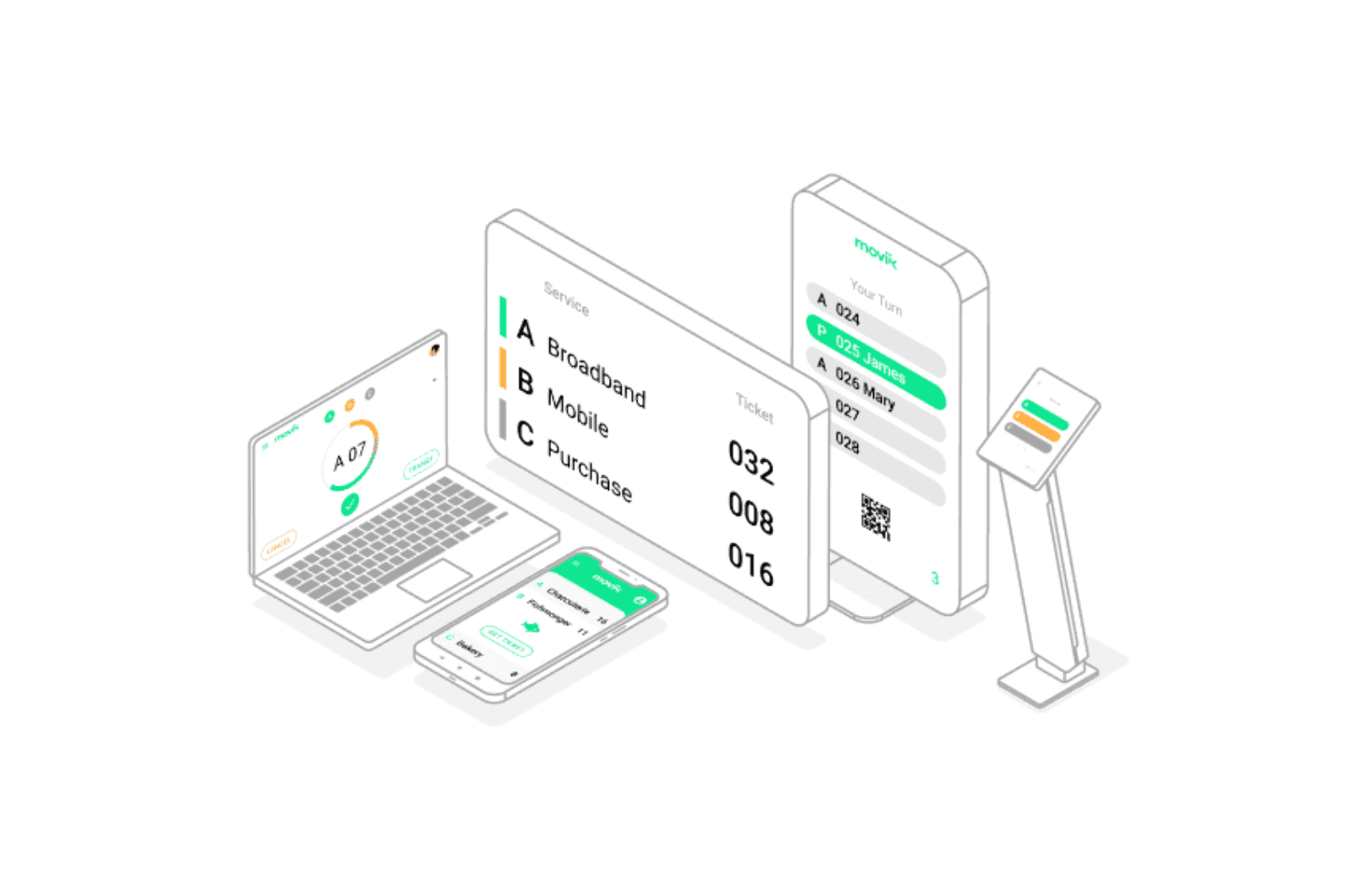
It allows people to join a queue via a kiosk, QR code, or link, track their place in real time, and receive updates on their smartphone or on-site display.
With Moviik, customers can join from anywhere — through Digital Ticket, paper ticket, or appointment booking — no app needed. Businesses gain complete visibility and control over operations.

Why business are moving to smart queue management?
Four key reasons are driving adoption across industries like retail, healthcare, and banking:
Customer expectations: People used to instant digital experiences don’t accept slow or invisible queues.
Operational efficiency: Real-time visibility allows better staff allocation and faster service.
Brand perception: Smooth, transparent queuing builds trust and satisfaction.
Data insights: Every interaction becomes measurable — helping identify bottlenecks and improve performance.
A queue management system isn’t just a tool for organizing people. It’s a platform for understanding and optimizing the entire service journey.
By the numbers the impact of queue management
- Businesses can reduce perceived wait times by up to 50%;
- Customer abandonment rates drop dramatically when people can track their position;
- Service efficiency increases, as staff can focus on serving instead of managing lines;
- Better organization means more customers served per hour — and more sales opportunities.
The hidden cost of unmanaged queues
Ignoring queue management affects more than just waiting time:
Lost revenue: Customers walk away when waiting feels uncertain;
Poor experience: Frustration can overshadow product quality or staff performance;
Inefficient use of staff: Employees spend time controlling queues instead of helping customers.
A well-managed queue can turn what used to be a weak point into a moment of brand strength.
From waiting in line to managing time
Traditional queues rely on people standing still and waiting.
Queue management systems give customers something much more valuable: their time back.
They can browse, sit, or even leave the area — and still keep their place in line.
At the same time, staff manage queues efficiently, balancing demand across service points and reducing pressure.
What used to be a source of frustration becomes a seamless part of the experience.
Queue management in action: Moviik’s approach
Queue management in action: Moviik’s approach
At Moviik, we’ve designed our solutions to fit every customer flow — from self-service kiosks to full digital queuing.
With the Moviik Digital Ticket, customers can:
Join instantly via QR code or web link;
See their real-time position in line;
Receive notifications when it’s their turn;
Wait freely without losing their spot.
And for businesses, Moviik provides:
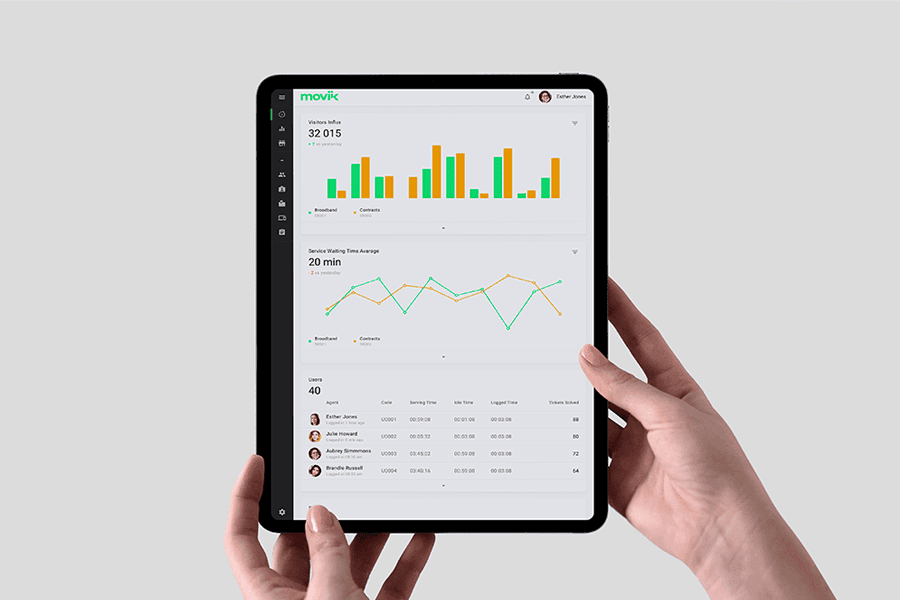
Real-time dashboards and analytics.;
Custom queue segmentation for multiple services.;
Integration with digital signage and player displays;
Consistent, measurable improvement in service efficiency and satisfaction.
This isn’t just queue management — it’s the foundation of modern customer experience.
How to implement an efficient queue system
To roll out a QMS effectively:
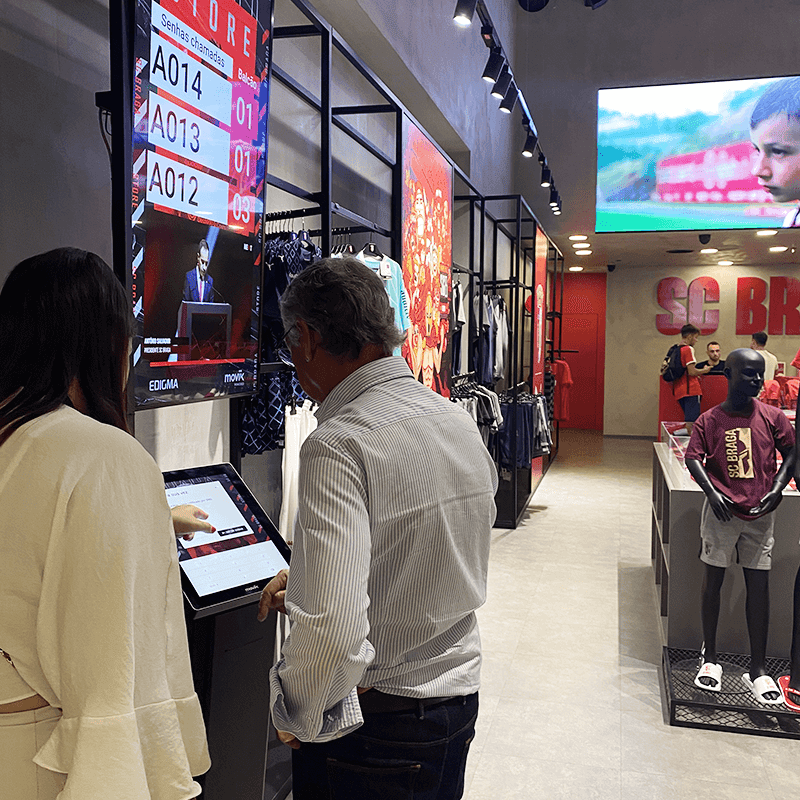
Define entry points: kiosks, QR codes, or appointment booking on your website;
Offer flexibility: digital and paper options for all customer types;
Keep customers informed: show position, estimated time, and notifications;
Use data: analyze traffic, service time, and abandonment rate;
Train your team: ensure consistent service quality across all touchpoints.
In just a few weeks, a smart queue management setup can transform both customer flow and staff workflow.
FAQ: Queue Management Systems
FAQ: Queue Management Systems
Do customers need an app?
No. Moviik’s solutions are web-based and can be accessed instantly via QR code or link.
Can it handle multiple services?
Yes. You can segment queues for different services or priorities to improve organization and reduce wait times.
What if some customers don’t have smartphones?
Kiosks and printed tickets ensure full accessibility.
Does it really increase sales?
Yes. Less frustration means more time to browse, discover products, and complete purchases.
The new standard of customer experience
The new standard of customer experience
Waiting is inevitable — frustration isn’t.
Queue management systems turn idle time into valuable time, creating better, faster, and more transparent interactions.
With Moviik, businesses move beyond simply managing queues.
They deliver control, visibility, and satisfaction — proving that even waiting can become a positive experience.
Customer experience doesn’t begin when a customer is served — it starts the moment they enter the queue. And that experience can define how they see your brand.
In a time when people expect speed, visibility, and control, standing in a traditional line feels outdated. That’s where a queue management system changes everything: it transforms waiting from a pain point into a moment of satisfaction and efficiency.
Quick answer: what is a queue management system?
A queue management system (QMS) helps businesses organize and control customer flow — digitally or physically.
It allows people to join a queue via a kiosk, QR code, or link, track their place in real time, and receive updates on their smartphone or on-site display.
With Moviik, customers can join from anywhere — through Digital Ticket, paper ticket, or appointment booking — no app needed. Businesses gain complete visibility and control over operations.
Why business are moving to smart queue management?
Four key reasons are driving adoption across industries like retail, healthcare, and banking:
Customer expectations: People used to instant digital experiences don’t accept slow or invisible queues.
Operational efficiency: Real-time visibility allows better staff allocation and faster service.
Brand perception: Smooth, transparent queuing builds trust and satisfaction.
Data insights: Every interaction becomes measurable — helping identify bottlenecks and improve performance.
A queue management system isn’t just a tool for organizing people. It’s a platform for understanding and optimizing the entire service journey.
By the numbers the impact of queue management
- Businesses can reduce perceived wait times by up to 50%;
- Customer abandonment rates drop dramatically when people can track their position;
- Service efficiency increases, as staff can focus on serving instead of managing lines;
- Better organization means more customers served per hour — and more sales opportunities.
The hidden cost of unmanaged queues
Ignoring queue management affects more than just waiting time:
Lost revenue: Customers walk away when waiting feels uncertain;
Poor experience: Frustration can overshadow product quality or staff performance;
Inefficient use of staff: Employees spend time controlling queues instead of helping customers.
A well-managed queue can turn what used to be a weak point into a moment of brand strength.
From waiting in line to managing time
Traditional queues rely on people standing still and waiting.
Queue management systems give customers something much more valuable: their time back.
They can browse, sit, or even leave the area — and still keep their place in line.
At the same time, staff manage queues efficiently, balancing demand across service points and reducing pressure.
What used to be a source of frustration becomes a seamless part of the experience.
Queue management in action: Moviik’s approach
Queue management in action: Moviik’s approach
At Moviik, we’ve designed our solutions to fit every customer flow — from self-service kiosks to full digital queuing.
With the Moviik Digital Ticket, customers can:
Join instantly via QR code or web link;
See their real-time position in line;
Receive notifications when it’s their turn;
Wait freely without losing their spot.
And for businesses, Moviik provides:
Real-time dashboards and analytics.;
Custom queue segmentation for multiple services.;
Integration with digital signage and player displays;
Consistent, measurable improvement in service efficiency and satisfaction.
This isn’t just queue management — it’s the foundation of modern customer experience.
How to implement an efficient queue system
To roll out a QMS effectively:
Define entry points: kiosks, QR codes, or appointment booking on your website;
Offer flexibility: digital and paper options for all customer types;
Keep customers informed: show position, estimated time, and notifications;
Use data: analyze traffic, service time, and abandonment rate;
Train your team: ensure consistent service quality across all touchpoints.
In just a few weeks, a smart queue management setup can transform both customer flow and staff workflow.
FAQ: Queue Management Systems
FAQ: Queue Management Systems
Do customers need an app?
No. Moviik’s solutions are web-based and can be accessed instantly via QR code or link.
Can it handle multiple services?
Yes. You can segment queues for different services or priorities to improve organization and reduce wait times.
What if some customers don’t have smartphones?
Kiosks and printed tickets ensure full accessibility.
Does it really increase sales?
Yes. Less frustration means more time to browse, discover products, and complete purchases.
The new standard of customer experience
The new standard of customer experience
Waiting is inevitable — frustration isn’t.
Queue management systems turn idle time into valuable time, creating better, faster, and more transparent interactions.
With Moviik, businesses move beyond simply managing queues.
They deliver control, visibility, and satisfaction — proving that even waiting can become a positive experience.


